AI Paradigm Shift in the New Era: The Strategic Roadmap Companies Must Adopt Now
Be A Racer Team
Author
Why AI Has Become the Core of Corporate Survival Strategy Today

AI is no longer merely "technology in the experimental phase"; it has become a "management infrastructure" that dictates corporate survival and growth. The explosive evolution of generative AI is pushing organizations beyond simple operational efficiency, demanding a fundamental reconstruction of their business models. For those leading new ventures and digital transformation initiatives, the pivotal question is how to strategically integrate AI to secure the next competitive advantage. This article draws on the latest trends and future forecasts to propose visionary first steps that companies should take now.
Current Market Trends and the Background of Technological Evolution
The AI market has undergone a dramatic transformation in recent years, driven by a rapid shift from traditional machine learning to generative AI. Alongside the performance leaps in Large Language Models (LLMs), multimodal AI capable of processing images, video, and audio simultaneously is becoming standard practice. In corporate environments, integrated AI assistants like ChatGPT, Gemini, and Copilot have been seamlessly embedded into Office suites and digital workspaces, solidifying their role as daily productivity tools. Conversely, concerns over data breaches and hallucinations are accelerating the adoption of "Safe AI Gateways" and on-premises AI infrastructure, often implemented alongside SIs and specialized vendors. Meanwhile, the rise of no-code platforms has created an environment where non-engineers can build AI agents using proprietary data, driving both the democratization and internal development of AI capabilities. As digital skill standards become more widespread across society and METI-led DX training programs expand, AI is evolving from a "technical challenge" into a "challenge of organizational culture and talent strategy."
Three Paradigm Shifts Brought About by AI
Shift 1: From Automation to "Autonomous Agents"
Traditional RPA and rule-based automation were limited to "accurately executing instructed tasks." However, modern AI agents powered by the latest LLMs autonomously plan, orchestrate multiple tools and APIs, and complete unknown tasks when given a clear objective. As demonstrated by data analysis agents deriving advanced insights directly from natural language prompts without SQL, or sales support AI providing end-to-end assistance ranging from real-time deal suggestions to retrospective coaching, AI is evolving from "task substitution" to a "decision-making partner." Organizations will need to transition their workflows from a "Human-in-the-Loop" model, where humans and AI share roles, to an "AI-in-the-Loop" framework where AI takes the lead while humans oversee and approve outcomes. This shift will exponentially accelerate organizational decision-making speed.
Shift 2: From General-Purpose Models to "Secure Proprietary AI"
While early generative AI adoption relied heavily on off-the-shelf general-purpose models, demand has now exploded for "specialized AI" deeply embedded in business operations while protecting company-specific context and confidential data. Vendors are increasingly offering hybrid platforms that combine on-premises and cloud LLMs to securely handle medical records, contract reviews, and knowledge management compliant with regulations like Japan's Electronic Records Retention Act. This enables companies to achieve the dual goal of "keeping data in-house while injecting AI intelligence into business processes." The growing trend of guided implementations by SIs and specialized training firms reflects a broader understanding that simply deploying tools is insufficient; establishing robust governance to structure corporate knowledge and sustainably operate it as a "knowledge asset" is essential. Balancing security with usability will become an absolute prerequisite for selecting future AI infrastructure.
Shift 3: From Digital Content to the Realization of "Physical AI"
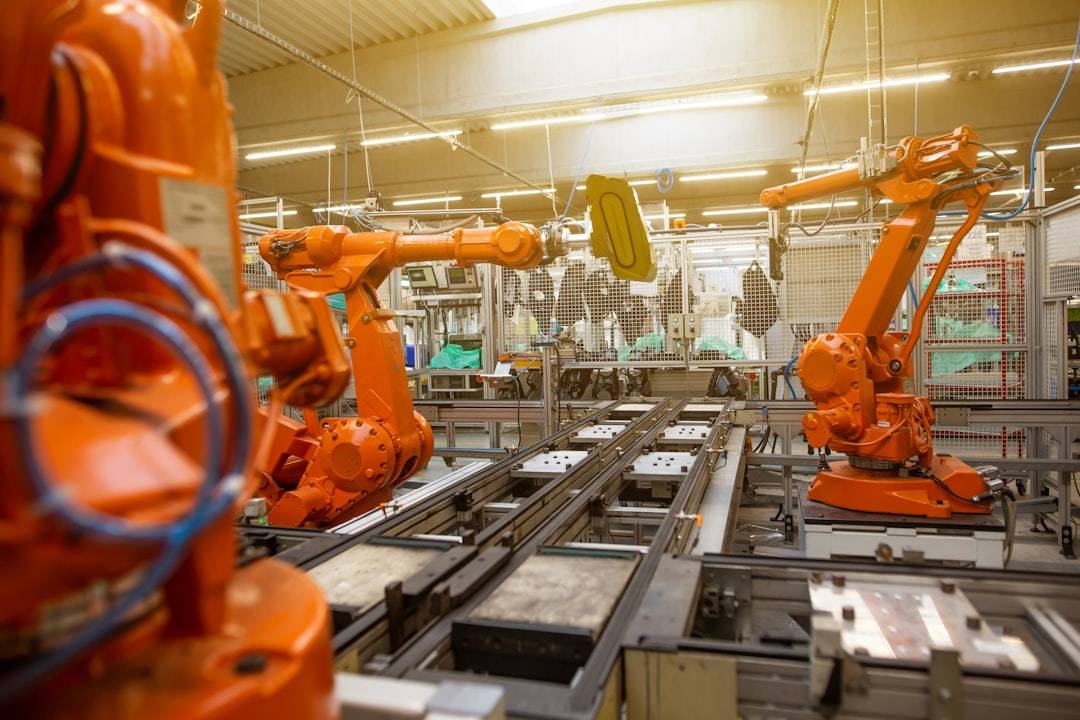
The application scope of AI is rapidly expanding beyond digital screens into "Physical AI," which interacts directly with the physical world. Advances in first-person environmental data collection and sophisticated annotation technologies enable AI to learn and optimize robotic perception, decision-making, and motion control in real time. Autonomous mobile robots in manufacturing, picking optimization in logistics warehouses, and smart mechanization in construction and agriculture are quickly becoming reality. The convergence of digital twins and AI simulation allows physical prototyping and testing to be completed virtually, dramatically shortening development lead times. Consequently, AI is breaking free from pure information processing, gaining a form of "embodiment" that directly controls matter and energy in the real world, and entering a phase that will fundamentally reshape industrial structures. A future where the boundaries between digital and physical vanish is fast approaching.
Industry-Specific Impacts and Future Forecasts
The impact of AI across industries is manifesting through both the resolution of sector-specific challenges and the creation of new value. In manufacturing, demand forecasting and autonomous supply chain optimization are becoming standard, while improvements in AI accuracy for defect detection and predictive maintenance will drastically increase equipment uptime. Looking ahead, "autonomous smart factories" managed collaboratively by AI agents—from design to manufacturing and maintenance—will become commonplace, establishing a structural shift where technology compensates for labor shortages. In retail and distribution, personalized marketing driven by multimodal customer behavior analysis will advance significantly, enabling real-time dynamic pricing and inventory optimization. Automation of customer service through unmanned stores and AI call centers will progress, shifting face-to-face interactions toward high-value consulting and experiential services. Within services, finance, and healthcare, highly specialized tasks such as contract review, automated medical record generation, and investment decision support will become standardized through AI assistance, provided compliance and security are guaranteed. As cross-industry data integration and AI platform standardization accelerate, the cycle for launching new businesses will speed up, making the prediction that service delivery models will shift toward "subscription-based AI services" increasingly realistic. Regardless of scale, transitioning to data-driven management leveraging AI is now an imperative for every organization, from SMEs to large enterprises.
Action Plans Companies Must Prepare Immediately
To thrive in the AI era, organizations must immediately execute the following three actions. First, establish AI governance and security infrastructure. Clearly define data classification, access controls, and hallucination mitigation strategies, and deploy secure implementation environments like Safe AI Gateways. Second, drive enterprise-wide AI literacy and talent development. Implement customized training programs tailored to each level, from executive leadership to frontline staff, embedding prompt engineering and AI agent utilization skills into the organizational culture. Sustainable adoption hinges not on one-off workshops, but on continuous, problem-solving-oriented guided training. Third, execute scalable PoCs starting from small wins. Begin by building no-code AI agents using proprietary data, then prioritize applying them to business workflows with clear ROI. Share success stories internally to foster a bottom-up ecosystem that expands AI adoption. Furthermore, building ecosystems with external partners and SIs is crucial. Rather than attempting to internalize everything independently, companies should focus resources on "AI-izing core operations" while actively leveraging specialized vendor expertise to strengthen unique competitive advantages.
Conclusion: Taking a Visionary Step to Co-create the Future
The evolution of AI poses a fundamental question that goes far beyond mere technological updates: how should companies engage with the world and create value? As the latest trends and forecasts indicate, the convergence of autonomous agents, proprietary AI, and physical AI will continuously push the boundaries of business speed and creativity. What truly matters is not asking what AI can do for you, but clearly defining what you aim to achieve alongside it. When new venture managers, DX leaders, and corporate strategy teams courageously place AI at the center of their strategy and combine organizational wisdom with cutting-edge technology, untapped markets and sustainable growth will unfold. The future is not something to wait for—it is something to co-create starting right now.
Accelerate your DX with Be A Racer
From cloud migration and AI adoption to full-stack development — we deliver the fastest digital transformation, end to end. Let's talk.
Tags
Comments
🗣️ Join the conversation
Sign in to leave a comment and join the discussion