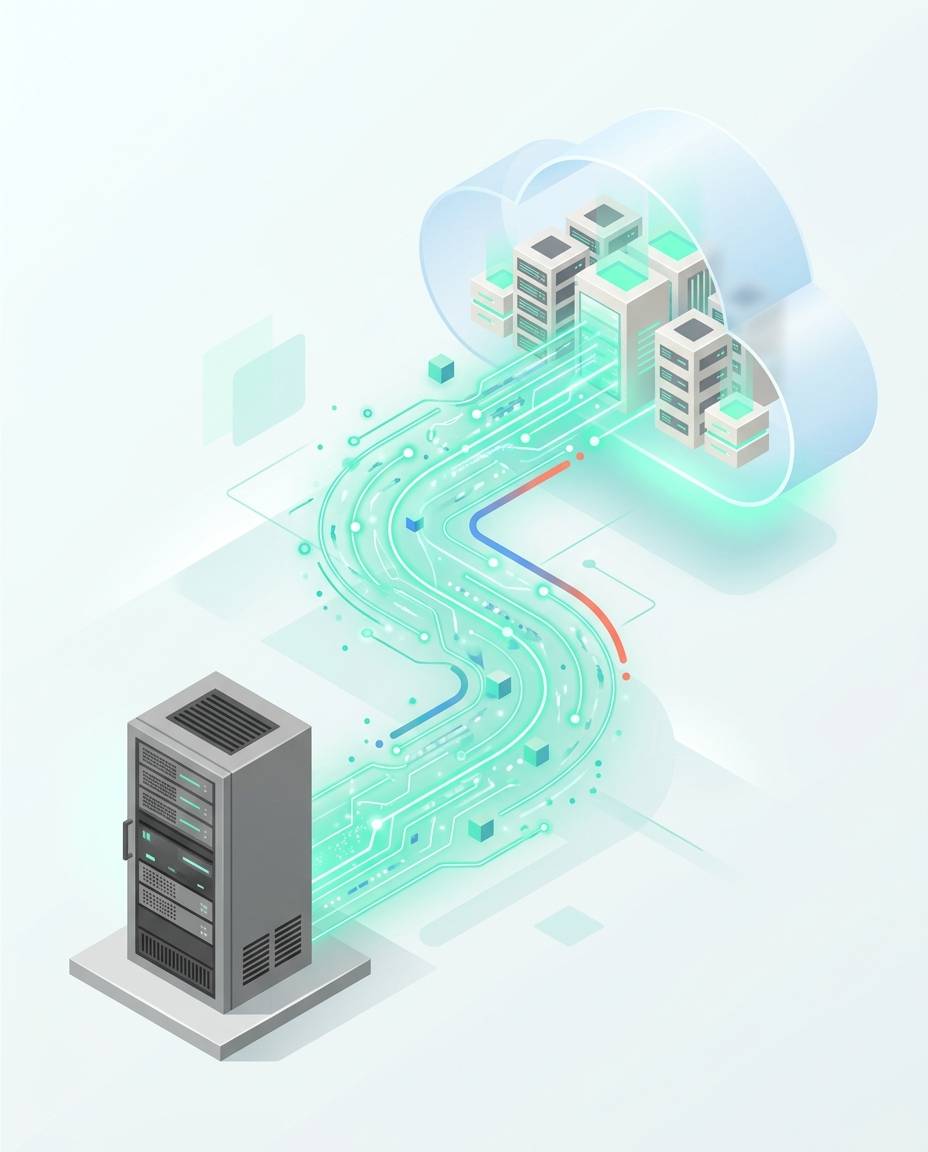
Turning the 2027 Deadline into a Cloud Starting Gun: A Practical Guide to Migrating Legacy ERP Foundations to the Cloud
Be A Racer Team
Author
What Is the '2027 Deadline'?
The SAP ERP (ECC 6.0) core system adopted by many large Japanese enterprises reaches the end of its mainstream maintenance at the close of 2027. Even with paid extended maintenance, 2030 is the ceiling, so migration to the next-generation ERP SAP S/4HANA is unavoidable. Because so many companies move at once to meet this deadline, demand for consultants and migration talent spikes. This is what is popularly called the 'the 2027 problem.'
Yet the essence is not just about SAP. Core systems frozen on-premises for years, person-dependent add-ons, black-boxed business logic ── whether you can treat these as a prime opportunity to move to the cloud will greatly shape your future IT competitiveness. 2027 is both a 'debt repayment deadline' and a 'starting gun for cloud adoption.'
Why Cloud Migration?
S/4HANA can run on-premises, on a private cloud, or on a public cloud. SAP strongly recommends RISE with SAP, a subscription-based offering premised on cloud migration, encouraging not a mere version upgrade but a 'cloud-first foundation renewal.'
The value cloud migration brings includes:
- Freedom from hardware refresh: the burden of buying new servers every few years and running data centers disappears.
- Elastic scale: resources flex up and down for month-end or fiscal-close load spikes and business growth.
- Early access to new features and AI: cloud editions update faster, letting you adopt generative AI and predictive analytics sooner.
- Business continuity (BCP): geo-redundancy and backups are standardized, easing disaster response.
Three Migration Approaches
ERP cloud migration comes in three broad types. Choosing the one that fits your situation determines success or failure.
1. Brownfield
An approach that carries over existing settings, data, and customizations as much as possible. It preserves current processes for a shorter, lower-risk move, but risks importing past debt (unused add-ons and overly complex settings).
2. Greenfield
An approach that redesigns business processes from scratch, building anew around standard functionality (Fit to Standard). It clears years of debt and drives business reform simultaneously, but carries a heavy load of requirements definition and change management.
3. Selective (Hybrid)
An approach that selects which assets to keep and which to rebuild, combining both. In real large enterprises, blends such as renewing finance while transferring logistics are common.
| Aspect | Brownfield | Greenfield |
|---|---|---|
| Time/Cost | Short/Low | Long/High |
| Degree of reform | Low | High |
| Risk | Importing debt | Requirements/change load |
| Best fit | Stable existing processes | Aiming for radical reform |
Five Steps for Japanese and Vietnamese Enterprises
Especially for companies with a Japanese head office and Vietnamese operations, migration spans two countries' processes, languages, and regulations, so sequencing matters.
- Visualize the current state (assessment): inventory live add-ons, interfaces, and data quality. Quantify migration difficulty with SAP's analysis tools.
- Decide the migration approach: choose among the three types against strategy and budget. Decide big-bang versus phased.
- Commit to Fit to Standard: review excessive customizations built for Japan-specific practices and check whether standard functionality can absorb them.
- Select cloud foundation and partner: compare RISE with SAP versus self-build on a major hyperscaler. Choose a partner with a proven migration track record.
- Parallel run and adoption: run old and new in parallel for a period, iterating on user training and data-migration validation before cutover.
The Vietnam Offshore Option
Amid the talent crunch of the '2027 problem', Vietnamese offshore development resources become a practical move. Processes such as ABAP development, data migration, test automation, and operations/maintenance can be handled well by a Vietnamese team via a Japanese-speaking bridge SE. The key to quality is thorough Ho-Ren-So (report, contact, consult) and doubling up design and review structures across Japan and Vietnam.
2027 is not a deadline but a starting point for building a foundation aimed a decade ahead. Companies that turn cloud migration from a 'forced chore' into an 'offensive investment' will win the next round of competition.
Summary
The end of SAP ECC mainstream maintenance in late 2027 is a powerful starting gun to move aging core systems to the cloud. Understand the three types ── brownfield, greenfield, selective ── and choose based on your debt and strategy. Follow the sequence from assessment to parallel run, and where appropriate weave in Vietnam offshore wisely. Rather than being chased by the deadline, use it as a lever to rebuild your cloud foundation ── that is the right way to face the '2027 problem.'
Accelerate your DX with Be A Racer
From cloud migration and AI adoption to full-stack development — we deliver the fastest digital transformation, end to end. Let's talk.
Tags
Comments
🗣️ Join the conversation
Sign in to leave a comment and join the discussion