![[TechNews Digest] Today's Top 10 Technology News Picks](https://images.unsplash.com/photo-1659084622165-6391a99e5ae8?crop=entropy&cs=tinysrgb&fit=max&fm=jpg&ixid=M3w4Njc3NjV8MHwxfHNlYXJjaHwzfHxUZWNoJTIwbmV3cyUyMGNvdmVyfGVufDB8MHx8fDE3ODcxODc4NzN8MA&ixlib=rb-4.1.0&q=70&w=1280&auto=format)
[TechNews Digest] Today's Top 10 Technology News Picks
Be A Racer Tech News
Author
Hello, your technology news curator. Today, we have carefully selected 10 pivotal tech stories shaping industries and society—from the latest MarTech trends and exclusive breakthroughs in AI semiconductor materials, to the convergence of data centers and renewable energy, alongside critical challenges in railway safety technology and the realities of drone AI training. We dive deep into the frontiers of digital transformation and analyze their profound business and societal impacts.
1. MarTech Trends: ESW Appoints New CEO, Privacy-First Healthcare Data Platform Secures Funding

Marketing technology is seeing a wave of notable developments. ESW, a company supporting e-commerce growth, has appointed Carl Cowling as its new CEO to accelerate its global expansion. In the healthcare data sector, Ours Privacy successfully raised $15 million in Series A funding for its privacy-first platform. Meanwhile, SerpApi has surpassed 1.5 million active users, and GrowthLoop announced a commerce media network solution integrated with platforms like The Trade Desk. As bot-driven email clicks continue to advance, data quality management and privacy protection are emerging as the next key competitive axes in MarTech.
2. Koshien Summer 2026: The Road to the Finals Where Data Analytics Meets Tradition

The 2026 Koshien Summer Tournament has reached the finals, setting up a clash between Chibei Wakayama and Kenda Takasaki, two teams with contrasting tactical approaches. In recent years, high school baseball has seen a dramatic increase in tactical precision thanks to pitch data analytics, defensive shift optimization, and video analysis tools. This tournament continues that trend, with teams leveraging digital scoring and AI-powered opponent analysis to deliver intense matches that blend traditional baseball with cutting-edge sports technology. Attention is increasingly focused on how technological advancements are enhancing player performance and strategic planning.
3. Economic & Market Trends: Beneficiary Stocks from AI Agent Adoption and Accelerating Semiconductor M&A

Amid market movements driven by U.S. Treasury fiscal consolidation measures and fluctuations in long-term interest rates, the technology sector continues to show robust performance. Mitsubishi Electric recently acquired a U.S. software company for ¥220 billion—its largest-ever deal—to strengthen its foundation in AI and IoT, signaling a surge in major semiconductor and software M&A activity. Furthermore, the practical deployment of AI agents is driving business efficiency across enterprises, fueling investor interest in related stocks. From a tokenomics perspective, initiatives aimed at optimizing AI cost-performance are also drawing significant industry focus.
4. Ajinomoto’s Semiconductor Business: Global Strategy for Insulating Material “ABF” Driving AI Demand

Ajinomoto, widely known as a food manufacturer, is gaining renewed recognition for holding over 95% of the global market share in a critical semiconductor material essential for the surging AI demand. The insulating material “ABF” (Ajinomoto Build-up Film), mandatory for high-performance CPUs and GPUs, is a core technology enabling semiconductor miniaturization. By applying amino acid fermentation technology to material development, the company has secured a dominant market position and driven record-breaking financial results. Beyond its food division, Ajinomoto is establishing a new growth model as a deep-tech enterprise by transferring its expertise to high-tech materials and healthcare sectors.
5. Medical & Semiconductor Applications of Amino Acid Technology: Ajinomoto’s Diversification and Innovation

Ajinomoto’s philosophy of continuous improvement extends far beyond food, actively applied to semiconductor packaging materials and gene therapy drug development. The ABF project, initiated when its lead researcher was in his twenties, has grown into an indispensable component for global high-end semiconductors. Furthermore, the company is leveraging decades of accumulated amino acid technology in healthcare, entering the cutting-edge bio-healthcare market through the acquisition of a U.S. gene therapy firm. By transcending traditional manufacturing boundaries, open innovation that merges materials science with life sciences is driving the company’s sustainable growth.
6. Data Centers & Renewable Energy: Offshore Wind Power Supporting Next-Generation Infrastructure

To address the rapidly growing power demand fueled by AI adoption, offshore wind power integration has emerged as a critical factor in Japan’s largest data center construction projects. Efforts to optimize the siting of renewable energy facilities alongside data centers are accelerating, fostering deeper industry-academia-government collaboration toward realizing carbon-neutral cloud infrastructure. Additionally, companies like Tiger Corporation are applying precision control technologies developed in manufacturing to healthcare and energy sectors, such as utilizing cell transport tech for regenerative medicine. The convergence of green technology and digital infrastructure will ultimately determine future competitiveness.
7. Interest Rate Rise Risks & The Future of Drone Warfare: The Intersection of Macroeconomics and Defense Tech

As uncertainties surrounding monetary policy grow—highlighted by long-term interest rate trends in Japan and the U.S. and FOMC meeting minutes—the funding environment for the technology industry is shifting. Meanwhile, drone technology is evolving rapidly for both military and civilian applications, with nations accelerating the development of next-generation defense systems leveraging autonomous control AI and edge computing. Amidst shifting dynamics among major memory chip manufacturers and ongoing semiconductor supply chain restructuring, building resilient technology supply chains and optimizing costs have become top priorities for corporate leadership in an era where geopolitical risks and technological hegemony are deeply intertwined.
8. Osaka Nakanoshima Museum Vermeer Exhibition: Immersive Digital Tech Meets Classical Art
Vermeer’s “Girl with a Pearl Earring,” which drew approximately 1.2 million visitors during its previous tour, is returning to Japan after 14 years for an exhibition at the Osaka Nakanoshima Museum. The showcase utilizes projection mapping on large screens and interactive video installations to visualize the historical context and creation process of 17th-century Dutch paintings through modern digital technology. By combining augmented reality (AR) and high-definition imaging with traditional art appreciation, the exhibition strengthens engagement with younger audiences and international tourists. The digital archiving of cultural heritage paired with experiential displays highlights new possibilities for ArtTech.
9. Tobu Railway Express Collision Accident: Rebuilding Railway Safety Technology & Work Management Systems

A serious accident occurred at Tobu Shinkumagawa Station in Tochigi Prefecture, where four workers were fatally struck by an express train while conducting weed removal operations. Tobu Railway held a press conference with the Ministry of Land, Infrastructure, Transport and Tourism, pledging strict measures to prevent recurrence. While the rail industry has been advancing the adoption of IoT-based track monitoring, AI-powered anomaly detection systems, and real-time worker location tracking platforms, this incident exposed critical vulnerabilities in on-site communication and safety verification protocols. There is now an urgent need to fundamentally revise safety standards by leveraging digital twins and automated control technologies.
10. Tobu Accident Press Conference & AI Training Facilities: The Reality of Safety Tech and Drone Attack Simulation
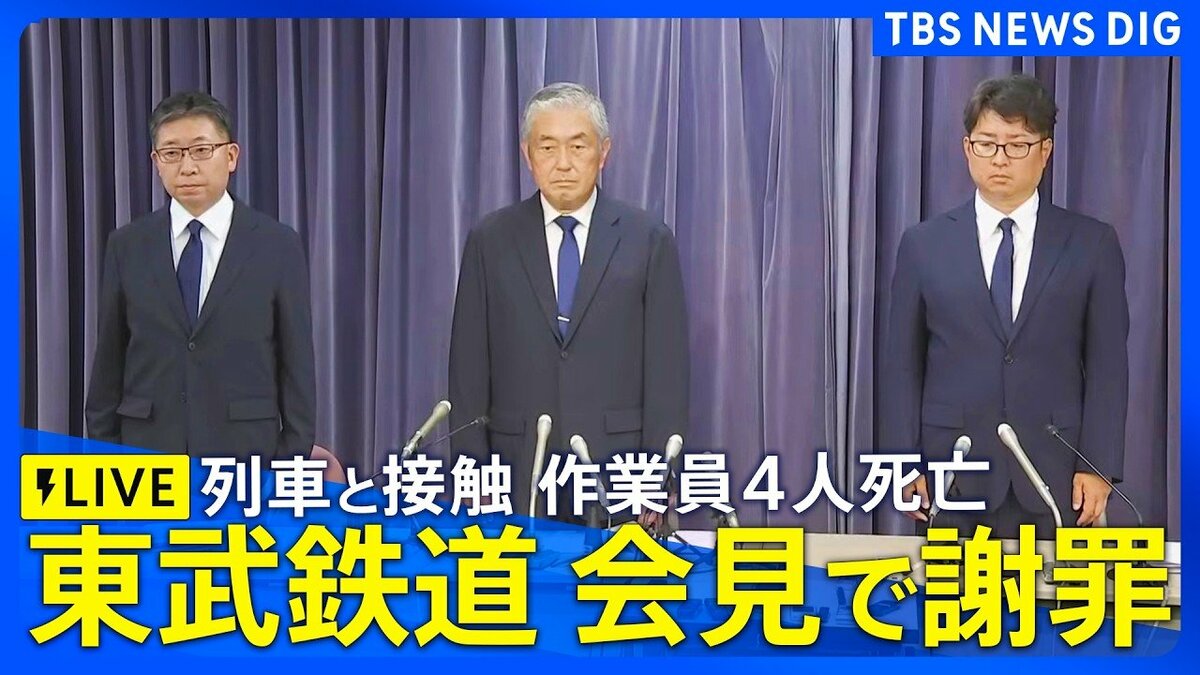
The Tobu Railway press conference revealed significant flaws in on-site safety verification workflows and command hierarchies, underscoring the urgent need to accelerate the adoption of rail safety technology. Concurrently, reports have surfaced regarding AI training for drone attacks conducted at undisclosed facilities, sparking international debate over the ethics and technical governance of autonomous weapons. Additionally, fraudulent capacity labeling in substandard mobile phone batteries has been uncovered, reinforcing the critical importance of hardware quality management and supply chain transparency. Ultimately, how society manages the risks and benefits brought by technological advancement will be the key to successful real-world implementation.
Accelerate your DX with Be A Racer
From cloud migration and AI adoption to full-stack development — we deliver the fastest digital transformation, end to end. Let's talk.
Tags
Comments
🗣️ Join the conversation
Sign in to leave a comment and join the discussion