
Samsung Profit Forecast Jumps 19x Amid… (Tech news 2026/07/07)
Be A Racer Tech News
Author
Hello. Here are today’s top technology news updates. While explosive AI demand continues to drive the semiconductor market and corporate earnings, we are witnessing a pivotal shift in industrial structures, marked by Microsoft’s organizational restructuring and the launch of a domestic AI alliance. We’ve also curated essential topics at the intersection of technology, society, and economics, including ethical challenges in neurotechnology and tech investment strategies amid high-interest-rate environments.
1. Samsung Profit Forecast Jumps 19x Amid Surging AI Demand; Microsoft Restructures Xbox Division

Driven by rapidly expanding AI demand, Samsung forecasts its Q2 operating profit will surge 19 times year-over-year. Meanwhile, Microsoft announced layoffs of 4,800 employees as part of its Xbox division restructuring, and Anthropic signed a $19 billion data center lease agreement with TeraWulf. As AI infrastructure and semiconductor markets undergo rapid consolidation, investors are increasingly shifting capital from chipmakers to hyperscalers. Simultaneously, practical AI adoption and structural market shifts are accelerating, evidenced by government agencies leveraging AI models for code auditing.
2. Latest Office Technology Trends: Konica Minolta’s New Models and Sharp-Foxconn Partnership
In the office technology and printing sector, Konica Minolta has launched the entry-level digital printing machine series “AccurioPress C5080/70/65.” Sharp and Foxconn have also signed a memorandum to strengthen collaboration in AI, smart automation, and ESG initiatives. Furthermore, products and services that balance sustainability and digitalization—such as eco-label certifications and next-generation inkjet technologies—are leading industry growth. Notable investments are being directed toward workplace efficiency and environmentally conscious technologies.
3. The Future and Ethics of Neurotechnology: MIT Student Warns of Surveillance Risks

MIT student Rachel Sava recently won the “Computing Futures Vision Award” for her paper examining the medical benefits of neurotechnology alongside the risks of its misuse in surveillance societies. She warns that brain implants could be exploited beyond healthcare, potentially enabling corporate productivity monitoring or government crackdowns on “thought crimes.” The paper emphasizes the critical need to integrate ethical and societal impact assessments early in the development cycle. As neurotechnology enters consumer markets, establishing robust privacy protections and governance frameworks has become urgent.
4. Hardware Trends and Security Challenges: Microsoft Layoffs and AI-Driven Ransomware

While Microsoft’s restructuring of 4,800 roles and the Xbox division overhaul shake up the industry, hardware developments such as anticipated price hikes for the Samsung Galaxy Z Fold 8 and size adjustments for the iPhone 18 Pro Max are drawing attention. On the security front, Alibaba banned the use of Claude Code due to tracking code concerns, and a bug was discovered in Apple’s “Hide Email” feature. Rapid advancements are occurring across both innovation and risk management, highlighted by AI-powered automated ransomware and rumors surrounding SpaceX’s AI device IPO.
5. Key Trends for IT Engineers: Google Gemini Mobile Support and Slack MCP Release

According to CodeZine’s weekly developer news rankings, mobile support for Google’s “Ask Gemini in Drive” took the top spot. Second place went to the public release of Slack’s MCP client, followed by third-place uptake of TechnoMatrix’s Japanese version of “Understand 7.2.” The integration of generative AI into development tools, expanded features for enterprise collaboration platforms, and AI-driven legacy code analysis are driving rapid adoption of practical AI tools among engineering teams.
6. European High-Tech & Green Tech Developments: EU Digital Sovereignty and Environmental Regulations

Recent European news highlights the intersection of environmental regulation and technological innovation, focusing on revenue trends from high-tech exports and potential mandates for microplastic filters in washing machines. Investments in sustainable technology are accelerating, showcased by successful solar-powered railway projects in Switzerland and water resource initiatives in the Alps. Amid broader political and sports coverage, it is clear that the EU is actively pursuing policies that balance digital sovereignty with green technology advancement.
7. Semiconductor Supply Chains and Asset Management: Extended Broadcom-Apple Partnership and Market Consolidation

Latest segments from TV Tokyo’s business programming highlight the extension of the Broadcom-Apple partnership through 2031, aimed at stabilizing the AI semiconductor supply chain. Conversely, Microsoft’s workforce reduction and Xbox restructuring signal a major structural shift in the gaming industry. As security issues like KDDI’s breach of 12.23 million email addresses come to light, market discussions are intensifying around capital rotation into AI-related stocks and the debate between index versus active management. The intersection of tech investment and asset allocation remains a key focus.
8. Launch of Japan’s Domestic AI Alliance: Tokyo’s Physical AI Strategy Amid US-China Rivalry

Japanese economic reports announce the formation of a domestic AI alliance comprising 44 companies, accelerating public-private collaboration in physical AI development. The central question is whether Japan can close the technological gap amid intensifying US-China strategic competition. Additionally, analysts are closely monitoring inflection points in the AI-driven market based on economic indicators from Japan, South Korea, and Taiwan. The impact of semiconductor supply-demand dynamics and manufacturing digitalization investments on economic cycles is under scrutiny, with hardware-software convergence positioning itself at the core of Japan’s next-generation industrial competitiveness and economic policy.
9. The High-Interest-Rate Era and the AI Rally: Turning Points Signaled by 30-Year Highs in 10-Year Government Bond Yields

Financial markets are witnessing 10-year government bond yields climb to their highest levels in three decades, making the transition to a high-interest-rate environment increasingly tangible. Debates are swirling around the risks underlying the AI stock surge, survival strategies for retail investors, and SpaceX’s IPO prospects, with the central focus being whether rising rates will trigger the end of the AI bubble. As concerns over renewed inflation and fiscal policy directions grow, the linkage between technology investments and macroeconomic trends is strengthening. Capital allocation toward companies pursuing sustainable growth despite high borrowing costs is emerging as the market’s next key theme.
10. Long-Term Yields in the 2.83% Range and the Real Economy: Correlation Between Wage Growth and Tech Investment
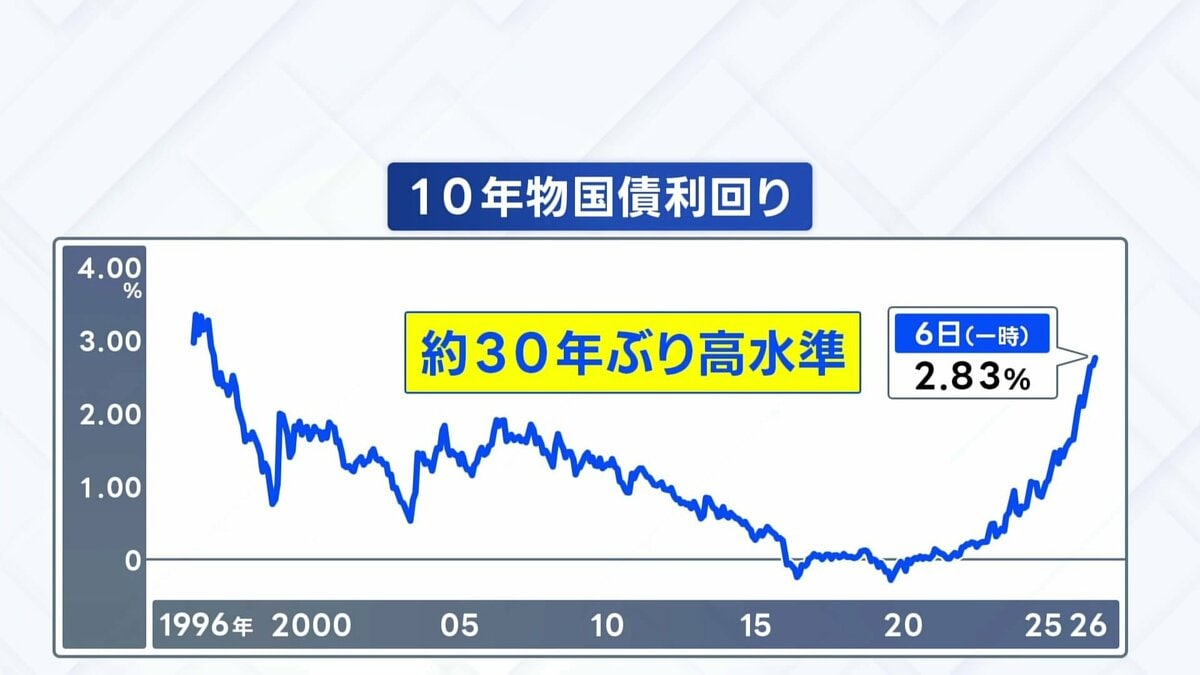
According to TBS News Dig, long-term yields briefly touched the 2.83% range, marking a 30-year peak. Nominal wage growth and strong spring wage negotiation results continue to fuel inflationary and interest rate pressures. Meanwhile, real-world economic and geopolitical factors are intricately intertwined, exemplified by calls for corporate price cuts and Toyota’s major investment in its Texas manufacturing facility. Despite the high-rate climate, the technology sector maintains its commitment to AI infrastructure spending, making the correlation between yield movements and tech stock performance the market’s primary concern.
Accelerate your DX with Be A Racer
From cloud migration and AI adoption to full-stack development — we deliver the fastest digital transformation, end to end. Let's talk.
Tags
Comments
🗣️ Join the conversation
Sign in to leave a comment and join the discussion