
Next-Gen Energy Storage, Hydrogen… (Tech news 2026/06/27)
Be A Racer Tech News
Author
Hello. Here is today’s Technology News Digest. From AI, semiconductors, and cybersecurity to energy and startup trends, we’ve carefully selected 10 topics that capture the forefront of business and innovation. Use these insights into the latest trends and challenges across each sector to inform your strategic planning for tomorrow.
1. Next-Gen Energy Storage, Hydrogen Conversion, and General-Purpose Robotics Accelerate

This site reports on the latest developments in next-generation energy and AI robotics. CATL has unveiled the world’s first field-validated 30MWh sodium-ion battery, setting a new benchmark for large-scale energy storage. Meanwhile, Cambridge University announced a technology that converts plastic waste into hydrogen using a solar reactor. The U.S. is accelerating investments in decarbonized energy infrastructure, including a $17.5 billion commitment to build ten AP1000 nuclear reactors. Additionally, Chinese robotics firms are pursuing two distinct approaches to general-purpose robot intelligence via zero-shot learning, highlighting the deepening convergence of AI and hardware.
2. Surge in Cyberattacks and Data Breaches Across Japan
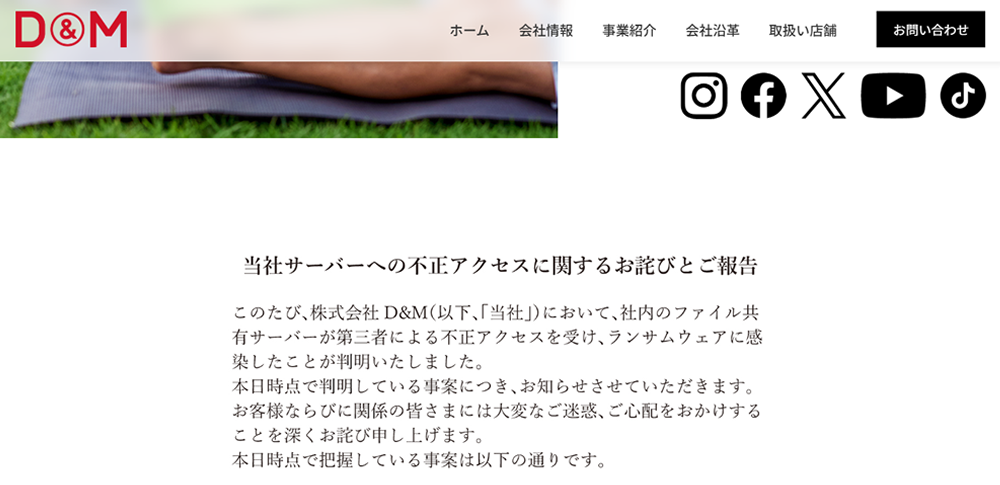
Japanese corporations and institutions are facing a wave of cyberattacks and data breaches. KDDI’s ISP-facing email system was compromised, raising concerns over the potential exposure of up to 14.22 million email addresses and passwords. Meanwhile, Nidec’s Taiwanese subsidiary suffered damages from a ransomware infection. The Metropolitan Police Department has issued warnings about “two-step phishing emails,” as attacks routed through supply chains and cloud services grow increasingly sophisticated. Companies must urgently strengthen access controls and enhance employee security training.
3. Startup Funding Trends, Autonomous Driving, and Maritime Digital Transformation
A new report focusing on the startup ecosystem and funding trends has been released. GO’s next strategic move—expanding into autonomous driving—is drawing significant attention, with insights into autotech fundraising trends and a curated list of leading companies. Meanwhile, Fleetzero, backed by CVCs from Maersk and Mitsui O.S.K. Lines, is driving transformation in the shipping industry by framing vessel electrification as a cost-reduction strategy. The report also explores Silicon Valley VCs’ philosophy of “investing in founders themselves,” capturing cross-border innovation trends bridging Japan and global markets.
4. Nikkei Hits Record High: Investment Strategies for AI & Semiconductor Stocks

As the Nikkei Average reaches record highs, investment strategies are expanding beyond AI-related stocks to include defensive plays and semiconductor logistics sectors. The program analyzes the characteristics of rare stocks that have consistently surged amid persistent inflation, highlighting companies that successfully pivoted core technological expertise into semiconductor ventures to enter growth trajectories. By examining both the opportunities and risks of the AI boom, the segment offers individual investors crucial guidance on portfolio diversification and identifying counter-cyclical sector bets.
5. Escalating Middle East Tensions, AI Warfare, and Advanced Tech Applications

U.S. Central Command announced aerial strikes on Iranian missile and drone storage facilities, as well as radar installations, widely viewed as retaliation for a cargo ship attack in the Strait of Hormuz the previous day. Rising geopolitical risks pose direct threats to energy supplies and global supply chains. The site also delves into the ethics and technical challenges of “AI warfare,” where algorithms assist in targeting decisions, alongside applications of cutting-edge tech in sports, such as AI-driven analysis of soccer players’ decision-making processes, exploring their broader societal impacts.
6. Retail DX & Supply Chain Overhaul Fueling the Ultra-Low-Cost Bento Boom

Behind the ultra-low-cost bento trend lies bold supply chain reform and digitalization within the retail and distribution sectors. Don Quijote is launching a new food-focused format called “Robin Hood,” while Lawson and FamilyMart are accelerating store format conversions. Aquatic products giant Umios is executing its “Reborn Strategy,” leveraging AI inventory management and direct-to-consumer digital platforms to cut waste and drive down prices. To meet consumer demands amid soaring inflation, building data-driven procurement, manufacturing, and logistics networks is becoming the industry standard.
7. OpenAI & Broadcom’s New Chip, SK Hynix’s U.S. Listing Push

Global competition in the semiconductor and AI industries is intensifying. OpenAI and Broadcom have unveiled a new chip codenamed “Jalapeño,” expected to significantly boost AI inference efficiency. South Korea’s SK Hynix is aiming for the second-largest funding round in its history ahead of a U.S. listing, while Micron’s net profit surged 15-fold driven by robust AI demand. The Japanese government has also announced a 370 trillion yen strategic investment in growth sectors like AI and semiconductors, as nations race to secure technological sovereignty. Tight supply-demand dynamics for memory and logic chips, coupled with geopolitical risks, will be key determinants of future market performance.
8. Municipal Digital Point System Glitches Highlight DX Challenges

A household digital point distribution system introduced by Hokkaido Prefecture as an inflation countermeasure has experienced repeated application failures, affecting approximately 10,000 households. Large-scale municipal digital transformation projects are encountering unexpected traffic spikes and system integration errors. While digitizing public services is essential for improving convenience, it demands robust infrastructure design that balances security, availability, and user accessibility. This incident serves as a critical lesson for the future operation of municipal point programs and their integration with national systems like My Number Points.
9. Why Japan Hasn’t Produced Global IT Giants: Hegemony Structures & Organizational Culture

Economist Emin Yilmaz explains why Japan has failed to nurture massive IT platforms, analyzing the issue through the lenses of “hegemonic structures” and “domestic digital demand.” He notes that China is the only country outside the U.S. to ride the digital revolution wave, attributing this to its unique combination of massive market scale and deliberate exclusion of American services. Yilmaz argues that Japan and Europe’s reliance on existing U.S. platforms stems not from a lack of technical capability, but from geopolitical and economic hegemony. He also highlights issues like organizational homogeneity and internal friction, advocating for structural reforms as essential to fostering true innovation.
10. Shadow AI Survey: 75% Report Unauthorized Use Amid Governance Gaps

A recent survey reveals that while 75% of domestic companies effectively permit the use of generative AI tools without IT department approval, 73% admit they lack proper governance over “shadow AI.” Balancing frontline productivity demands with information security and compliance remains a critical challenge. Rather than imposing blanket bans, organizations must establish robust governance frameworks, provide approved toolsets, and clearly define data handling protocols. Striking the right balance between driving digital transformation and managing risk will be the key differentiator for future competitiveness.
Accelerate your DX with Be A Racer
From cloud migration and AI adoption to full-stack development — we deliver the fastest digital transformation, end to end. Let's talk.
Tags
Comments
🗣️ Join the conversation
Sign in to leave a comment and join the discussion