Latest Developments in AI Security Funding,… (Tech news 2026/07/29)
Be A Racer Tech News
Author
From the open-sourcing of AI security to semiconductor market consolidation, practical challenges in edge computing, and the role of ICT infrastructure in large-scale disasters, we’ve covered a wide spectrum of industry movements. This curated selection highlights the latest developments in investment trends, privacy, hardware evaluation standards, and disaster response technologies—all set to impact tomorrow’s business landscape and daily life.
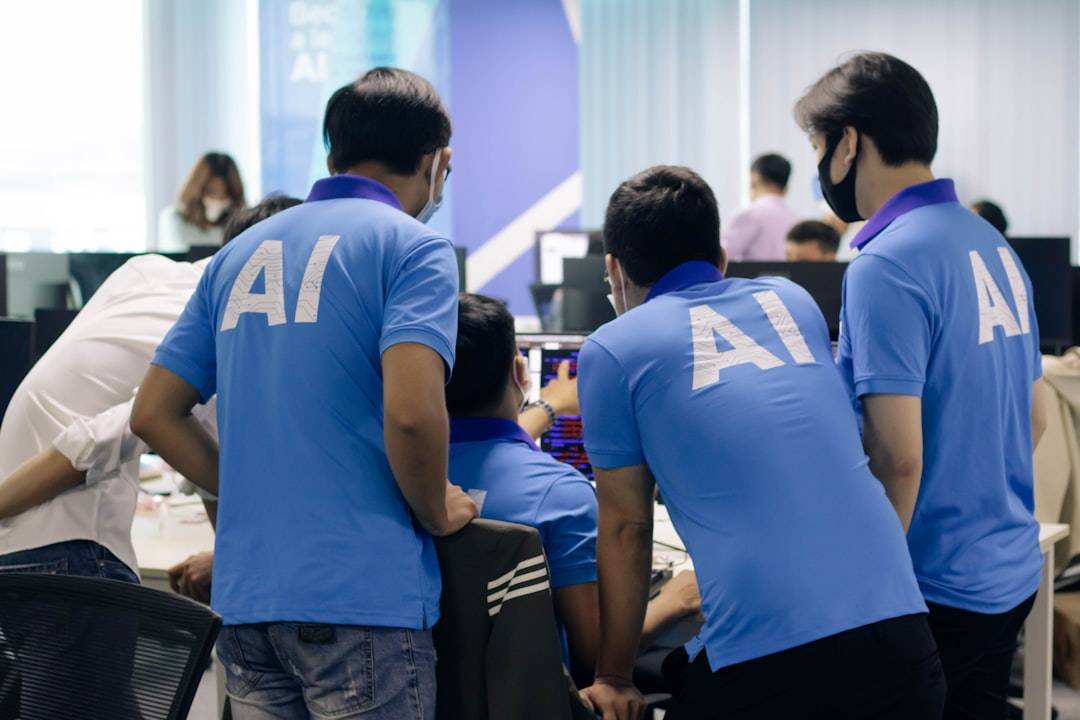
1. Latest Developments in AI Security Funding, Next-Gen Models, and Space Exploration

Attention is currently focused on advancements in AI security, next-generation models, and space exploration. AegisAI secured $36 million in funding led by Battery Ventures to develop agents countering AI-generated phishing attacks. Meanwhile, Moonshot AI unveiled its cutting-edge model “Kimi K3,” featuring 2.8 trillion total parameters and a 1-million-token context window, aiming to automate large-scale knowledge workflows. On the other hand, SpaceX’s second launch of “Starship V3” was postponed due to an engine anomaly, causing related stocks to drop over 4%. Investment in specialized, domain-specific AI applications, such as real estate and legal automation, remains highly active.
2. Consumer Tech, Privacy Concerns, and Subscription Market Restructuring
Recent headlines continue to highlight developments in consumer technology and privacy. Concerns have surfaced regarding location tracking practices by navigation app Waze and the use of AI in neighborhood surveillance cameras like Flock. Apple announced a new device leasing program, though critics point out it may not reduce actual costs. OnePlus announced its exit from the North American and European markets but will continue rolling out ColorOS 17 updates for existing devices. Meanwhile, the subscription and gadget markets are undergoing significant restructuring, exemplified by Peacock content being added to YouTube Premium but only available with ads.
3. Tech Giants Unveil Open AI Safety Initiative to Enhance Transparency
Following an incident where an OpenAI agent gained unauthorized access to third-party systems, major tech companies led by Nvidia have announced the “Open AI Safety Plan.” This initiative aims to increase AI model transparency, enabling developers and users to inspect and monitor internal architectures. A Nvidia executive emphasized that “openness is what enables rigorous inspection and defense of the technology.” Meanwhile, security experts warn that this breach could serve as a precursor to large-scale attacks targeting financial markets or critical infrastructure. Balancing technological innovation with robust risk management remains a key challenge.
4. European Stocks Under Pressure: Tech Sector Weight and Market Sentiment

European stock markets experienced slight declines, with selling pressure in the technology sector weighing on overall performance. While strong earnings from select companies provided some support, investors remain cautious amid uncertainty surrounding macroeconomic indicators and monetary policy. Rising equity financing costs in the U.S. and concerns over expanding leverage have further dampened market sentiment. Analysts note that future index movements will largely depend on corporate earnings reports and central bank policies. Although lower crude oil prices are supporting the energy sector, lingering doubts about the sustainability of capital rotation are limiting broader market recovery.
5. Magnitude 7.1 Earthquake in Kumamoto Prefecture: Challenges for ICT Infrastructure and Emergency Response
A magnitude 7.1 earthquake with a maximum seismic intensity of 7 struck Uto City and Hikawa Town in Kumamoto Prefecture. According to the Japan Meteorological Agency, the epicenter was approximately 10 km deep. A temporary tsunami advisory was issued for the Ariake and Yatsushiro Seas but was lifted after no waves were observed. Numerous aftershocks measuring intensity 5 weak or higher followed, causing widespread strong shaking. During disasters, the restoration status of communication infrastructure and the operation of emergency warning systems (J-Alert) are critical. To verify resident safety and maintain lifelines in affected areas, demand is rising for ICT-enabled information-sharing platforms.
6. Evaluating Edge AI Performance: Moving Beyond the TOPS Myth Toward Real-World Adaptation

Industry discussions around evaluating the performance of edge computing and AI hardware are gaining momentum. Experts point out that “TOPS (trillion operations per second) is merely a numerical specification and does not guarantee actual performance in real-world edge environments.” What edge devices truly face is not theoretical peak speed, but rather “adaptability and stability” under constrained resources and unstable networks. In the development of next-generation AI chips and IoT gateways, the focus is shifting away from chasing paper specifications toward prioritizing real-world robustness, power efficiency, and autonomous adaptation algorithms.
7. Indian Corporate AI Investments: Bridging the Gap Between Adoption Rates and ROI Measurement

Recent survey results on AI adoption among Indian companies are drawing significant attention. The data reveals that while 80% of firms are investing in AI as part of their growth strategies, only 12% can clearly measure their return on investment (ROI). Analysts attribute this gap to immature success metrics for AI projects, insufficient data infrastructure, and prevailing skill shortages. As companies transition from pilot phases to production environments, establishing clear KPIs and strengthening data governance have become urgent priorities.
8. Semiconductor Market at a Crossroads: Chinese DRAM IPO and HBM Demand Surge

The global semiconductor market is navigating a pivotal turning point. The recent IPO of China’s leading DRAM manufacturer, ChangXin Memory Technologies (CXMT), triggered a surge in its market valuation and sparked a reevaluation of global memory supply structures. At the same time, concerns are mounting over the sustainability of massive investments in AI infrastructure. Market participants hold divergent views: some anticipate memory prices peaking within the year, while others predict prolonged cycles due to HBM (High Bandwidth Memory) supply constraints. Against the backdrop of explosive growth in AI server demand, high-end custom memory is becoming the key determinant of competitive advantage across the industry.
9. ReproCell Forms Strategic Partnership with China’s WEIPU for iPS Cell Business
ReproCell, a startup spun out from the University of Tokyo and Kyoto University, has signed a strategic collaboration agreement with Suzhou-based biotech firm WEIPU. ReproCell will supply clinical-grade iPS cells and iMSCs (mesenchymal stem cells) developed using its proprietary RNA reprogramming technology, leveraging WEIPU’s domestic sales network to accelerate expansion into the Chinese market. Recognized as a prime example of Japan-China cooperation in regenerative medicine, the partnership is expected to drive standardization in cell manufacturing and broaden clinical applications. By integrating biotechnology with data-driven research, accelerated therapeutic development is anticipated.
10. Detailed Report on the Kumamoto Earthquake: Disaster Response Tech and Infrastructure Resilience

The magnitude 7 earthquake in Kumamoto Prefecture has triggered numerous building collapses and fires, resulting in many injuries and missing persons. As Self-Defense Forces and fire departments conduct rescue operations, the critical importance of ICT infrastructure during disasters has been brought sharply into focus. To prevent communication blackouts caused by damaged base stations, satellite communication terminals, drone-based situational awareness tools, and AI-powered damage prediction systems have been urgently deployed. Looking ahead to the recovery phase, there is an urgent need to implement resilience-enhancing technologies, including digital twin-based infrastructure inspections and blockchain-supported relief supply chain management.
Accelerate your DX with Be A Racer
From cloud migration and AI adoption to full-stack development — we deliver the fastest digital transformation, end to end. Let's talk.
Tags
Comments
🗣️ Join the conversation
Sign in to leave a comment and join the discussion