![[TechNews Digest] Top 10 Technology News Stories Today](https://images.unsplash.com/photo-1650234083211-f1feaf324d4c?crop=entropy&cs=tinysrgb&fit=max&fm=jpg&ixid=M3w4Njc3NjV8MHwxfHNlYXJjaHwxMXx8VGVjaCUyMG5ld3MlMjBjb3ZlcnxlbnwwfDB8fHwxNzkwNDcxMDg0fDA&ixlib=rb-4.1.0&q=70&w=1280&auto=format)
[TechNews Digest] Top 10 Technology News Stories Today
Be A Racer Tech News
Author
Hello, I'm your Technology News Curator. In today's tech digest, we have carefully selected a diverse array of the latest trends, ranging from the explosive expansion of AI infrastructure and the renewed focus on local computing, to advancements in logistics robotics, next-generation mobile processors, and IT transformation in education. Through these 10 featured articles, we take a deep dive into the current landscape of this rapidly evolving digital ecosystem.
1. Practical Tech Guides and Latest Hardware Trends
This article features a wealth of practical guides directly relevant to everyday tech life, covering everything from troubleshooting Windows 11 Bluetooth connectivity issues and tracking Samsung smartphone price trends, to analyzing the economic realities of the Tesla Powerwall. It also comprehensively addresses user questions across both hardware and software domains, including the fundamentals of audio compression techniques for improved sound quality, the meaning behind MacBook’s “rainbow circle mark,” RAM optimization settings in AMD environments, and how to choose the right Bluetooth headphones. Furthermore, it explores forward-looking topics such as hydrogen fuel conversion from plastic using solar panels, and long-term support trends for smartwatches and mesh Wi-Fi systems.
2. Massive AI Data Centers at a Monthly Production Pace and the Economics of Autonomous Trucks
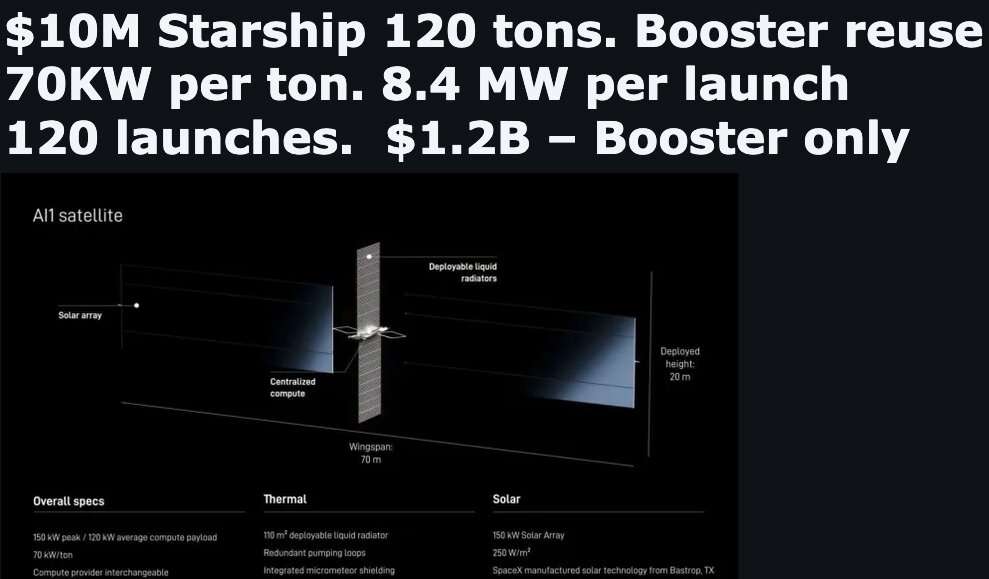
In the construction of next-generation AI infrastructure, SpaceX’s plan to mass-produce massive 450MW-class data centers at a rate of one per month has drawn significant attention. Aiming to complete five facilities by the end of 2026, this astonishing pace—building what competitors typically take years to construct in just four months—has the potential to fundamentally reshape the supply structure of AI computing resources. The article also explores the roadmap for Tesla Semi’s autonomous driving capabilities and the commercial rollout of robotaxis, alongside discussions on Jevons’ Paradox regarding AI efficiency. It delves deeply into disruptive technological and industrial trends, including the rationale for placing data centers in space and power-driven infrastructure strategies that do not wait for semiconductor shortages.
3. Lightweight VR Glasses, Keyboards on Smartphones, and AMD’s Rise

This section covers the latest hardware market intelligence, including leaks about the upcoming iPad mini featuring the A20 chip, performance and pricing trends for the iPhone 18 Pro series, and expected delays for the RTX 60 series. It also provides detailed reports on the evolution of consumer gadgets, such as predictions for keyboard-equipped smartphones emerging as alternatives to foldables, Meta’s ultra-lightweight (~100g) glasses-style VR device, and AMD’s breakthrough surpassing a $1 trillion market capitalization. Additionally, it offers a tech media perspective that multifacetedly explores the intersection of science, technology, and society, covering AI’s impact on creative industries, sustainable PC design trends like the CPU-swappable Acer Vero 16, and the challenges of spacecraft maintenance.
4. The Frontiers of Logistics Digital Transformation and Physical AI Robotics

Digitalization and automation are accelerating across the logistics industry. German company Transporeon is integrating AI agents into its transportation management software, promoting hybrid operations that require human verification before execution. UK-based IESYS highlights that internal facility processing speeds are a primary cause of entrance and exit congestion, advocating for operational optimization through data integration. Meanwhile, Amazon is investing over $100 million in Indiana to build a new facility manufacturing components for North America’s logistics robot network. According to the International Federation of Robotics (IFR), the number of operational industrial robots worldwide has surpassed 5 million. The report also covers recent developments where physical AI and robotics are driving logistics efficiency, including the emergence of Feather Robotics, which offers modular robots for developers at $30,000.
5. Historical iPhone Teardown Exhibition and Next-Gen Tech Show Launch

Hosted by Nikkei BP, the "Technology Exhibition Shaping the Future: Nikkei Cross-Tech NEXT Tokyo 2026" will open on September 29. The venue will feature test drives for autonomous vehicles alongside displays of cutting-edge hardware such as humanoid robot hands and construction 3D printers. Seminars led by specialized journalists and practitioners from leading companies will cover themes including AI, quantum communication, and optoelectronic fusion technology. Of particular note is the exhibition of historical iPhones, continuously disassembled and analyzed from the original model to the latest "iPhone 18 Pro." Recent teardowns of the newest models revealed a design prioritizing cooling performance to efficiently dissipate heat from main semiconductors. This major event brings together the current state and future outlook of technology, allowing attendees to experience industry innovation firsthand.
6. Financial Markets and Cash Liquidity in the Age of AI

Even as AI technology sweeps through the economy, a growing consensus in financial markets holds that "cash is still king." U.S. investors are currently focusing most intently on how effectively financial institutions can attract and retain customer cash deposits. During the zero-interest-rate era, deposits were often treated as nearly worthless, and banks could easily raise funds thanks to the Federal Reserve's balance sheet expansion. However, as the financial landscape shifts, liquidity preservation and deposit retention capabilities are resurfacing as key valuation metrics for bank stocks. While digitization and AI are transforming financial services, the Wall Street Journal examines how traditional cash liquidity management and institutional funding strategies remain critically important for supporting the real economy.
7. New Chip Integrating AI Super-Resolution for Mobile Gaming

Qualcomm has announced that its latest mobile processor, the "Snapdragon 8 Elite Gen 6," will integrate AI super-resolution technology for smartphone gaming. This system halves the rendering resolution to reduce GPU load, then uses AI to upscale the generated images into high-definition visuals in real time. As a result, mobile devices can deliver console-quality graphics while significantly suppressing battery consumption and heat generation. The evolution of modern chip architectures, which strive to balance performance and efficiency in the mobile gaming market, holds the potential to become the standard for future smartphone content development, representing a technological breakthrough that will fundamentally enhance the player experience.
8. Breaking Cloud Dependency and Redefining Local Computing

As reliance on cloud services wanes and the importance of "data sovereignty" is reassessed, demand for physical media remains resilient, accelerating a return to local computing environments. Notable developments include optimized hardware designs that utilize mobile CPUs in desktop PCs to achieve both quiet operation and effective heat suppression, as well as the emergence of dedicated machines equipped with 128GB of memory capable of running large local LLMs. This trend reflects more than just a performance race; it signals a growing user demand for complete control over their data and computing resources. Alongside risks associated with legacy system vulnerabilities, this tech trend report offers a deep analysis of the renewed value of local computing and physical devices in the AI era.
9. Cultivating Ready-to-Use IT Talent and Driving Educational DX

The Nagoya Campus of Tokyo IT Programming & Accounting Vocational School delivers practical education that blends IT skills with business acumen. Beyond supporting youth skill acquisition through open campus events and programming competitions, the school runs a blog explaining the mechanics of everyday technologies—such as weather forecasting IT infrastructure, QR code scanning, and theme park support systems—to high school students. With flexible hybrid learning options that allow students to continue their studies despite severe weather or illness, alongside robust tuition support programs, the institution actively supports career development for students from diverse backgrounds. This piece highlights the school's initiatives in shaping talent cultivation for the AI era and delivering up-to-date IT literacy education designed to produce job-ready professionals.
10. From Telecom Carrier Trends to Cybersecurity

This comprehensive news digest covers key developments within Japan's domestic IT sector. Highlights include changes in telecommunications and payment services, such as NTT Docomo's rate adjustments, Rakuten Mobile surpassing subscriber milestones, and expanded point rewards for Suica. Security and infrastructure challenges are also under scrutiny, notably the Gyazo data breach, freee system outage, and a major JCOM communications disruption. On the hardware front, discussions center on comfort evaluations for Meta VR Glasses, Microsoft's announcement of next-gen Copilot, new Logitech G products, and smartphones featuring 7000mAh batteries. The gaming industry segment covers various topics, including the latest "Aresu de Ikou 9" title, Steam release schedules, and court orders for damages in Nintendo Switch piracy lawsuits. This roundup captures the latest intersections of reliability and convenience across IT services, spanning daily life to entertainment.
Accelerate your DX with Be A Racer
From cloud migration and AI adoption to full-stack development — we deliver the fastest digital transformation, end to end. Let's talk.
Tags
Comments
🗣️ Join the conversation
Sign in to leave a comment and join the discussion