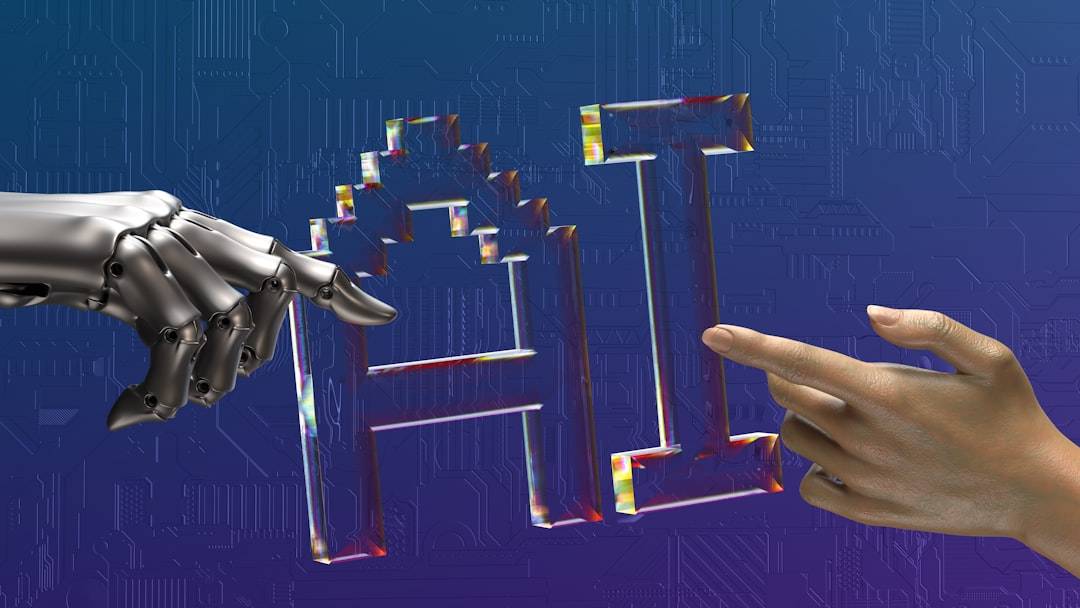
The Next Business Revolution Driven by Generative and Predictive AI: Strategic Roadmaps and Future Insights for DX Leaders
Be A Racer Team
Author
Introduction

Why must companies now concentrate their management resources on AI strategy? Because artificial intelligence has evolved from a mere tool for operational efficiency into a cognitive infrastructure capable of transforming executive decision-making itself. The fusion of content creation driven by generative AI and high-precision future inference powered by predictive AI is rewriting the rules of the market. The source of competitive advantage has shifted from economies of scale to learning velocity and execution precision enabled by AI. Drawing on the latest technological trends, this article outlines the fundamental transformations leadership must grasp and provides a compass for establishing lasting competitive advantage in the years ahead.
Current Market Trends and Background
The current AI market stands at a historical inflection point where technological maturity and societal acceptance are rising simultaneously. The explosive evolution of large language models has drastically reduced the cost of generating text, images, and code, accelerating the democratization of creative work. At the same time, the widespread adoption of IoT sensors and digital twins is exponentially increasing the real-time data that serves as the foundation for predictive AI training. As societies age and geopolitical risks disrupt supply chains, information volumes exceeding human cognitive capacity have become the norm. Consequently, AI’s role is expanding from a supportive assistant that offers options to an autonomous partner that proposes strategies and executes them end-to-end. Companies are moving beyond simple implementation phases and entering a critical stage where building sustainable AI operating models centered on data governance and ethical standards is essential. Technological advancement is progressing exponentially, making it an era that demands leading rather than merely catching up.
Three Paradigm Shifts Brought by AI
1. From Creation to Co-Creation: The Evolving Role of Generative AI
Generative AI has gained attention for its ability to produce entirely new content based on historical data, but its true value lies in its function as a co-creation platform that extends human creativity. Traditional AI merely sought optimal solutions within given parameters, whereas modern generative models deeply understand context and can anticipate the intentions of marketers and designers to offer proactive suggestions. However, simply automating output does not create differentiation. The key is integrating a workflow process that allows humans to select and refine the correct solutions from the vast variations generated by AI, applying human aesthetic judgment and business acumen. This dramatically shortens the lead time from ideation to prototyping, accelerating the innovation cycle itself. Companies should redefine generative AI not as a cost-cutting measure, but as a creative engine designed to generate new revenue streams.
2. From Reactive Response to Proactive Control: The Precision Evolution of Predictive AI
Predictive AI serves as the core of business automation, leveraging statistical models and machine learning to infer future outcomes from historical trends. Recent breakthroughs in causal inference and time-series forecasting algorithms have equipped it with the ability to go beyond extracting mere correlations and identify direct drivers of business impact. As a result, challenges such as stockouts, equipment failures, and customer churn are shifting entirely from post-incident response to pre-emptive prevention. For instance, demand forecasting models are increasingly capturing subtle fluctuations across supply chains and automatically optimizing procurement plans. The true power of predictive AI does not lie in eliminating uncertainty, but in visualizing risks and enabling dynamic resource management that allocates executive resources at the most effective moments. To ensure decision-making speed keeps pace with market changes, organizations must embed a data-driven decision culture throughout every level of the enterprise.
3. From Standalone Tools to Autonomous Ecosystems: Integration of Intelligent Automation
As generative and predictive AI converge and integrate with RPA and BPM systems, enterprises are transitioning from isolated task automation to seamless, autonomous processes. Intelligent automation creates a closed loop: when predictive AI detects anomalies or opportunities, generative AI instantly drafts response scenarios, and execution engines automatically drive the workflow. This integration breaks down departmental silos and eliminates the lag between decision-making and execution. Companies must look beyond point-solution technology deployments and reconstruct organizational data flows and permission frameworks. Designing human-in-the-loop architectures that clearly delineate where AI operates autonomously versus where human approval is required will become the next source of competitive advantage. Balancing autonomy with control enables the realization of scalable operational foundations.
Industry-Specific Impacts and Future Projections
In manufacturing, digital twins and predictive maintenance are becoming standard, driving line downtime risks toward zero. AI will control entire supply chains in real time, while also automatically executing energy optimizations aimed at achieving carbon neutrality. In retail and e-commerce, generative AI-powered personalized product recommendations will merge with predictive AI-driven dynamic inventory management. Reasoning-based commerce, which anticipates shifts in customer lifestyles, will become the norm, completely erasing the boundaries between physical stores and online platforms. For services and financial sectors, compliance and AI governance remain the top priorities. Predictive AI will handle risk model testing and fraud detection, while generative AI will assist with customer service documentation and ESG reporting. AI built on transparency and ethics will secure market share by significantly compressing regulatory compliance costs. Within the next three years, companies lacking AI-centric business models will face a heightened risk of being left behind. Cross-industry data integration and ecosystem development will be the key to drawing new growth curves.
Action Plans Enterprises Must Prepare Now
Capturing the future requires strategic investment and organizational transformation. First, establish high-quality internal data infrastructure and robust governance frameworks. Since AI output accuracy directly correlates with training data quality, prioritize data cleansing and access management. Second, cultivate and recruit cross-functional AI talent. Foster organization-wide AI literacy by ensuring professionals who understand specific business domains can effectively collaborate with AI systems. Third, adopt an agile deployment approach: start with small-scale PoCs and rapidly scale use cases with clear ROI. Finally, develop an AI ethics charter and ensure full transparency. Technical superiority becomes meaningless without stakeholder trust. Position AI not as a black box, but as an explainable partner, and build continuous audit and improvement cycles to secure long-term success. Executive leadership must demonstrate the resolve to champion this vision and drive the transformation forward.
Conclusion
AI is no longer an optional enhancement; it is mission-critical infrastructure for business survival. Only those enterprises that connect the creative explosion of generative AI with the decision-making precision of predictive AI through intelligent automation will lead us through this era of uncertainty. Rather than fearing technology, we must reframe it as a compass that expands human intellect and take decisive action to steer our organizations toward transformation today. In this new era woven by data and algorithms, foresight and execution capability will determine an organization’s fate. The future belongs exclusively to companies that evolve alongside AI.
Accelerate your DX with Be A Racer
From cloud migration and AI adoption to full-stack development — we deliver the fastest digital transformation, end to end. Let's talk.
Tags
Comments
🗣️ Join the conversation
Sign in to leave a comment and join the discussion